
Manasota TAP
Building a trusted pool league website for the modern player
Services
Product Design, UX Research, UX Content Writing, Branding
Timeframe
March – June 2024
Reimagining the pool league experience
With only one league serving the Manatee and Sarasota area, local players were eager for alternatives. Recognizing the need, seasoned player Michael Kandy founded Manasota TAP. Seeking to address growing frustrations among fellow players, Michael approached us to help elevate the league experience and prepare for a successful launch.
Our Challenge
Create a modern, community-focused website and brand that inspires trust, attracts new members, and delivers an enjoyable user experience.
The Solution
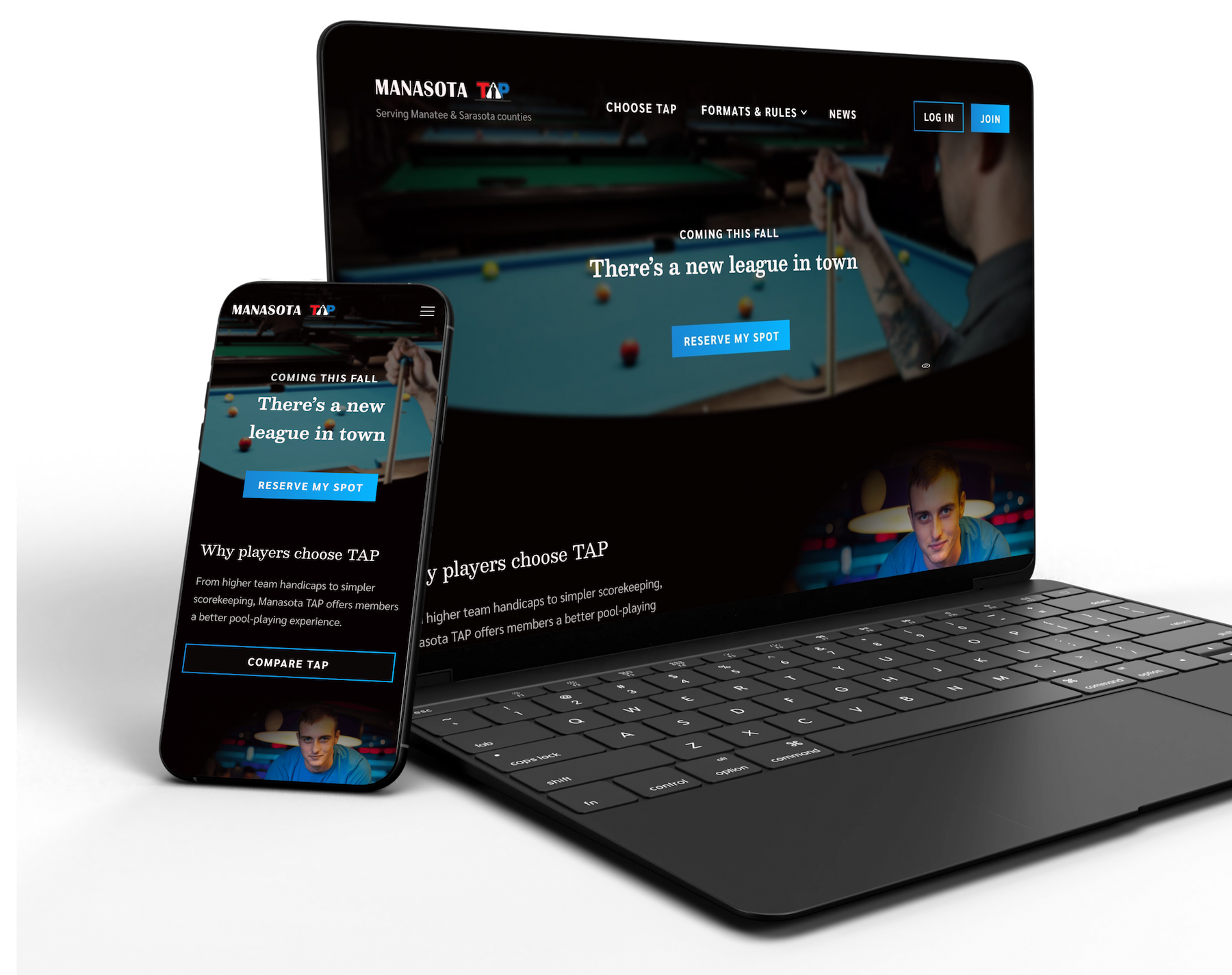
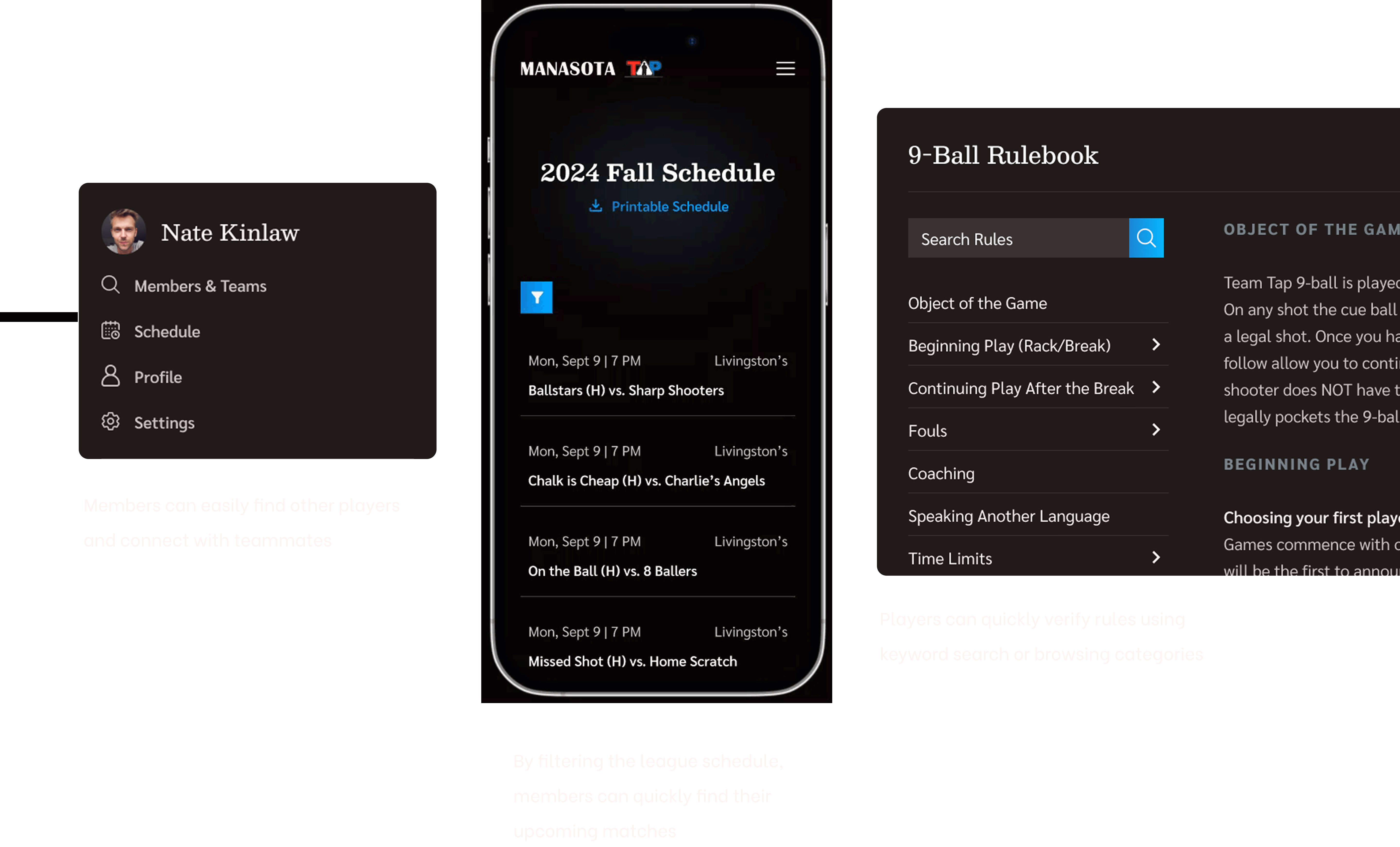
We developed a responsive website with contemporary features like e-payments, online player registration, profile management, and schedule filtering. Resources such as a searchable rulebook—organized by format—make it easy for players to find what they need, whether mid-match or prepping for play.
To foster community engagement, members can easily connect with fellow players and teams, and stay up to date with league news and updates.
Going inside the mind of a player
Building on Michael’s preliminary research and website mockup, we set out to validate his assumptions and gain a deeper understanding of player needs. To do this, we conducted a small-scale qualitative study with local pool league players, asking questions like, “What challenges do you face?” and “What would make you more likely to join, or stay, in a league?”
Our research confirmed several of Michael’s initial insights and uncovered new perspectives that directly influenced the site’s design.
Insights
Opportunities
Players don’t trust league operators
Build a relationship through transparency and communication
People join leagues as a way to socialize and relieve stress
Help people connect and relax
Joining a league can be overwhelming for new players
Provide clear guidance and training resources
Verifying game rules is cumbersome
Provide searchable rulebook by game and format
Payments go missing and can’t be tracked
Offer online payment, history and receipts
Manual scorekeeping is a pain and distracts from the game
Automate processes
Defining the key players
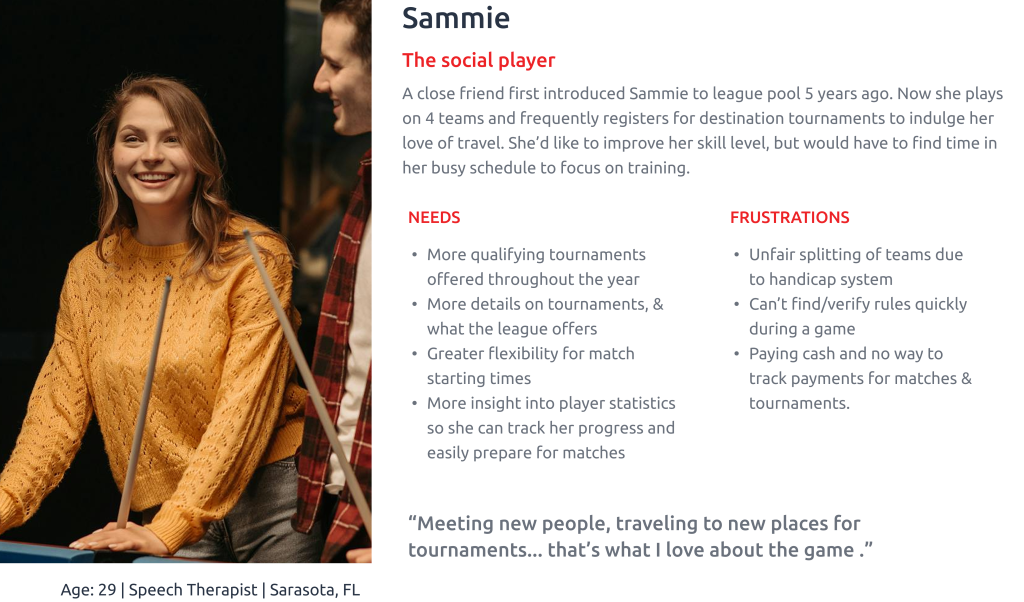
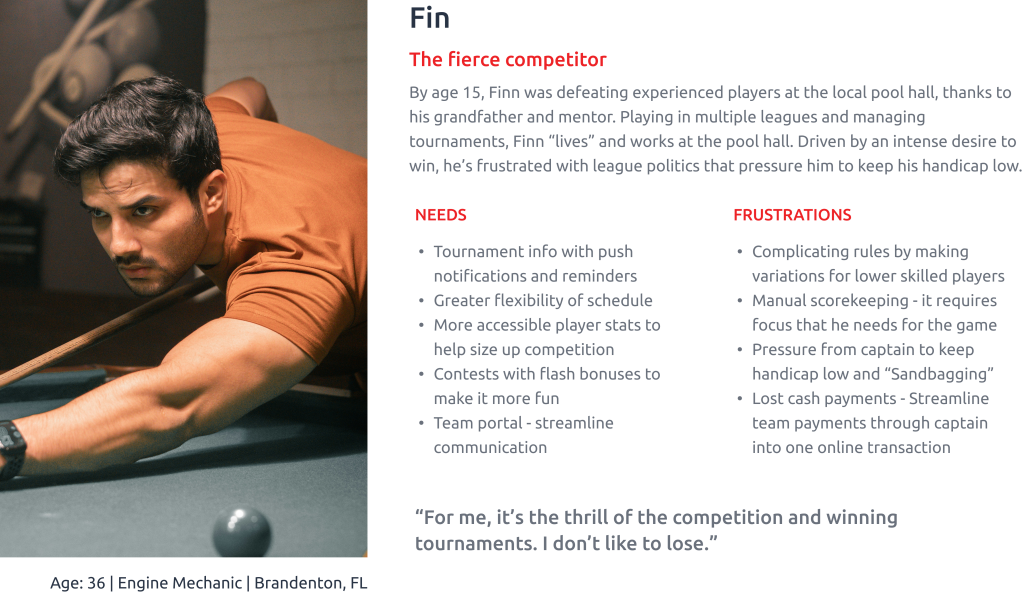
Using insights from our research, we developed two personas, Sammie and Fin, each representing the distinct needs, challenges, and motivations of potential pool league players. These personas helped guide decisions around features, content, navigation, and user flows.
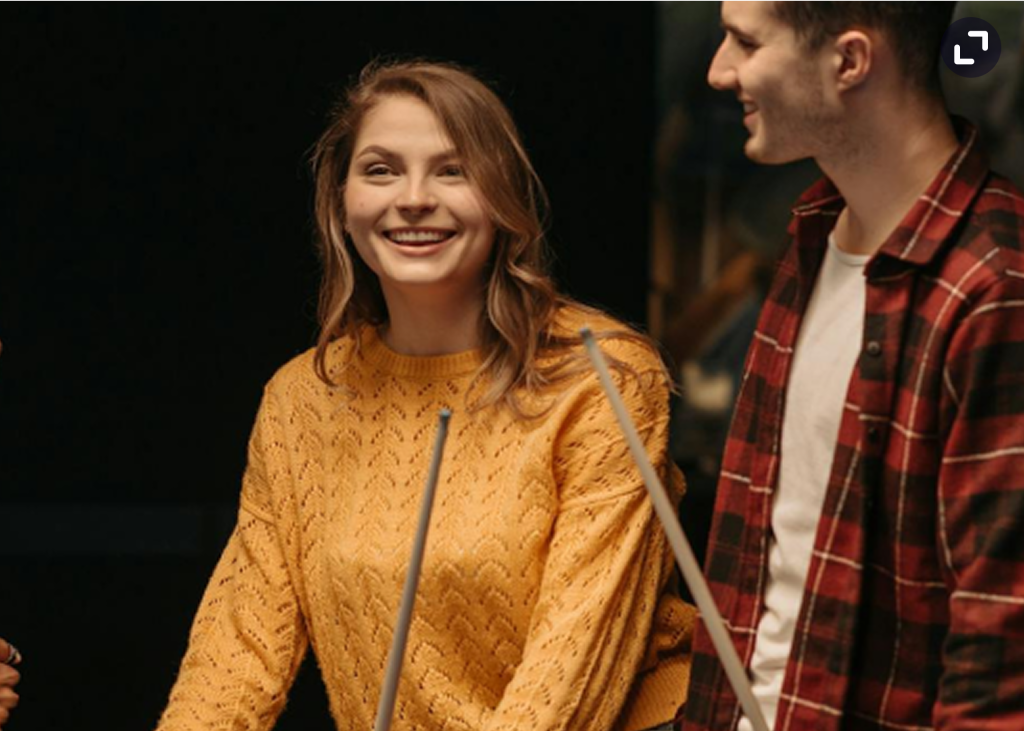
Sammie, the Social Player
“Meeting new people, traveling to new places for tournaments…that’s what I love about the game .”

Fin, the Fierce Competitor
“For me, it’s the thrill of the competition and winning tournaments. I don’t like to lose.”
Aligning site architecture with player needs
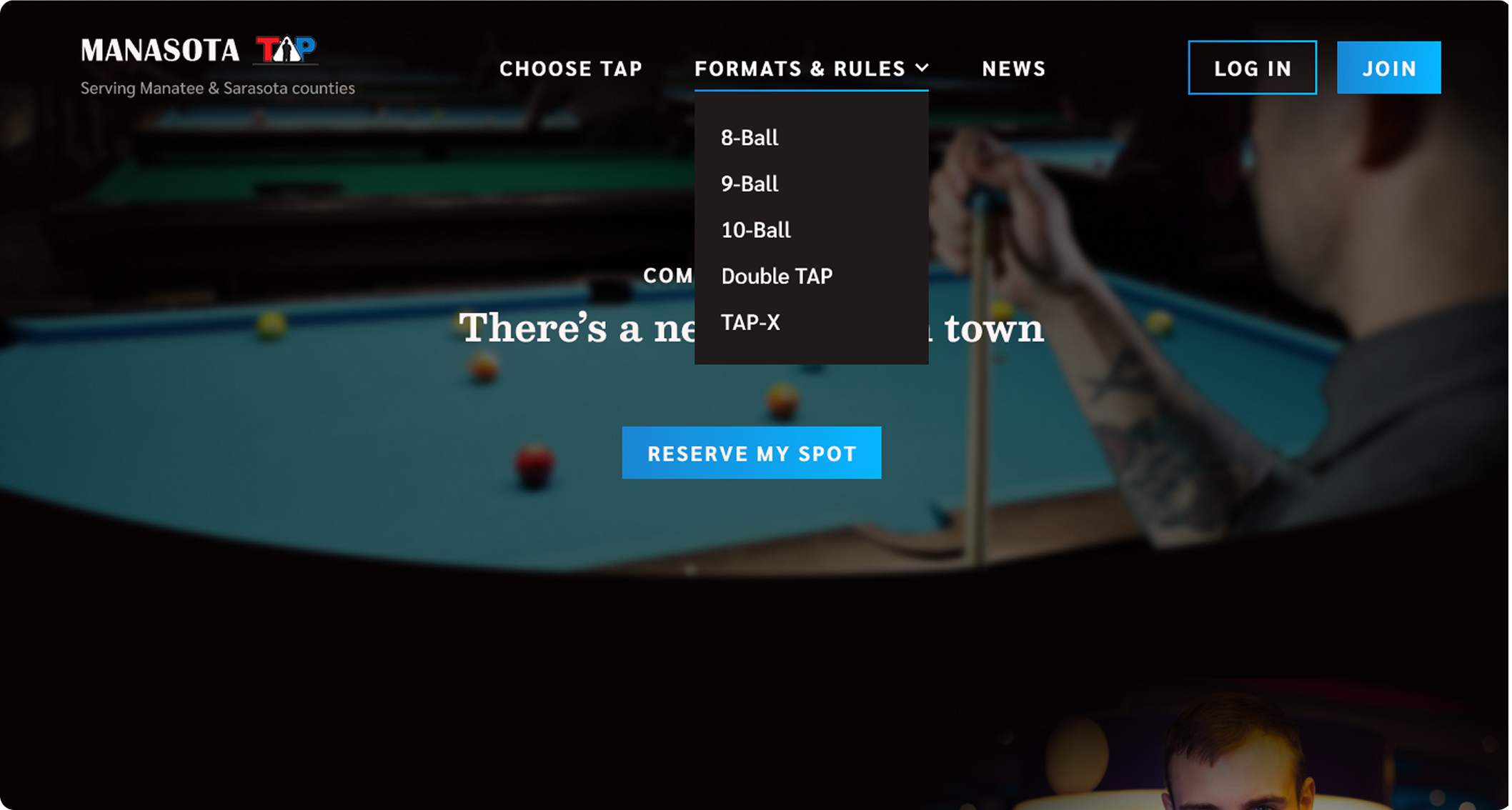
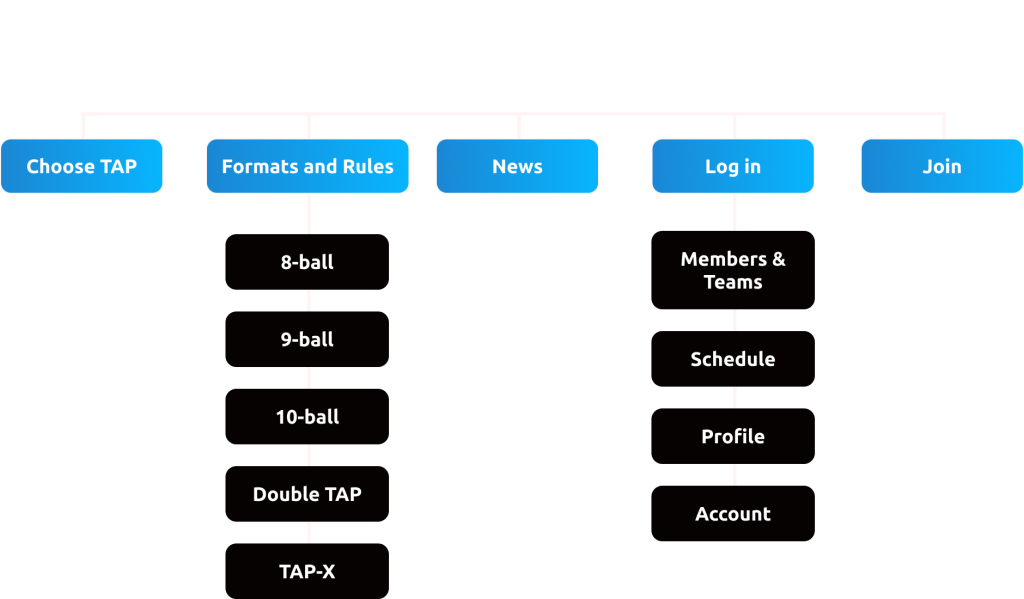
To streamline the original navigation, we reorganized and labeled content to align with key moments in the player journey. For example, the section “Choose TAP” supports players considering whether to join the league, while “News” is useful for both current and prospective members.
To validate our structure, we conducted usability tests centered on essential tasks, like finding new member registration, paying dues, locating specific game rules, and checking team schedules.
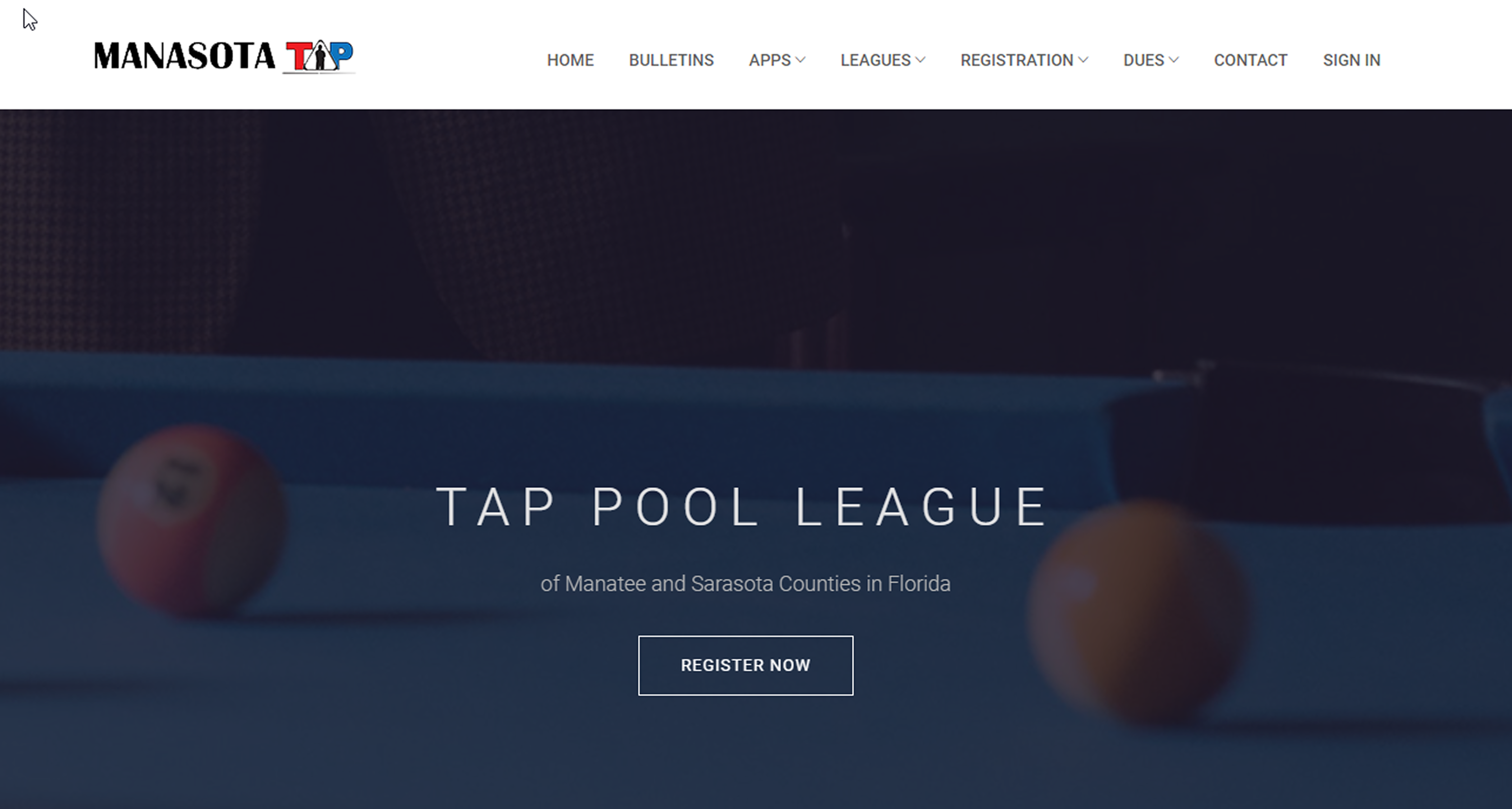
Menu with 8 items might overwhelm users with too much information
A simplified menu aligned with the member journey and a clear call to join
Reinforcing brand value through onboarding
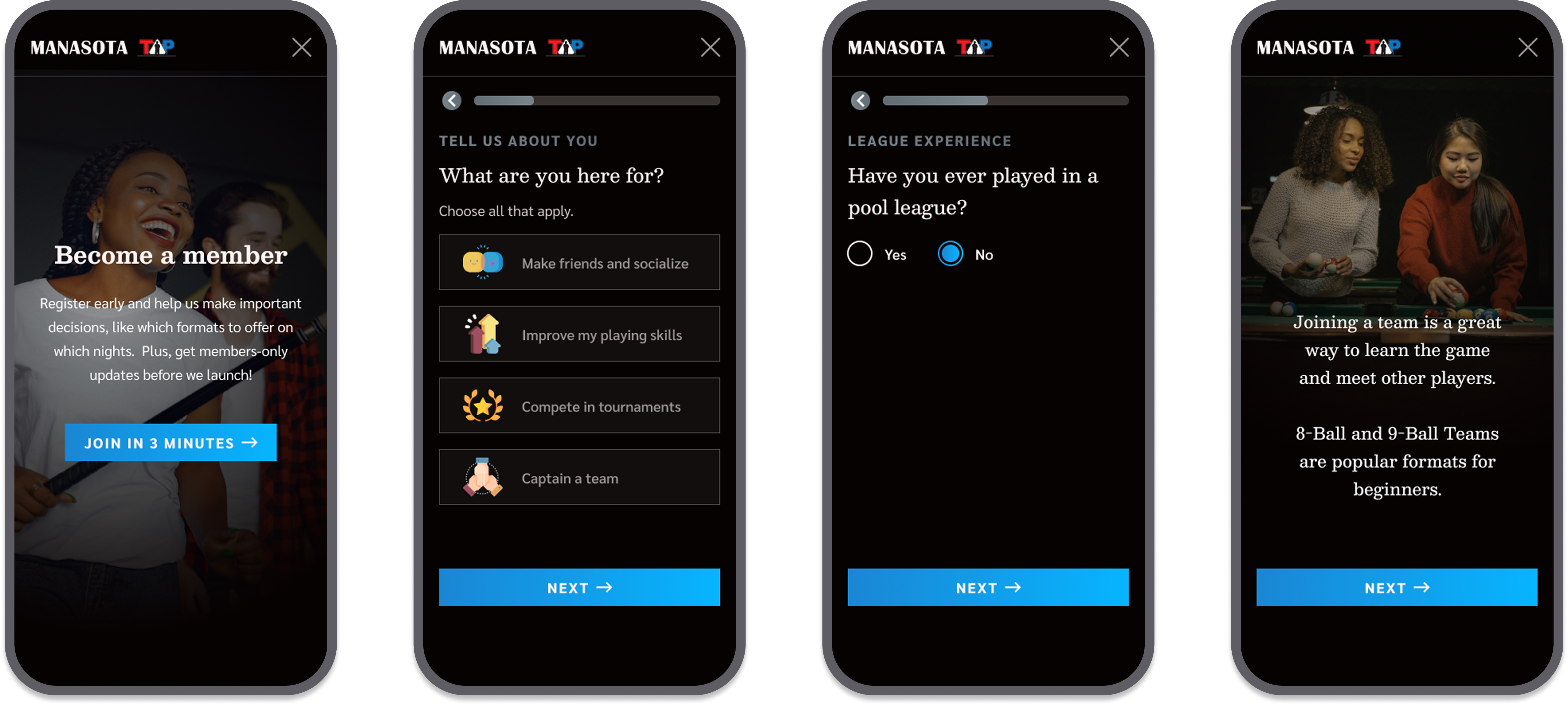
Understanding the power of first impressions, we reimagined member registration as a dynamic onboarding experience. By blending user input with purposeful content, we introduced new members to the league’s unique value and brand identity—right from the start.
New member registration user flow
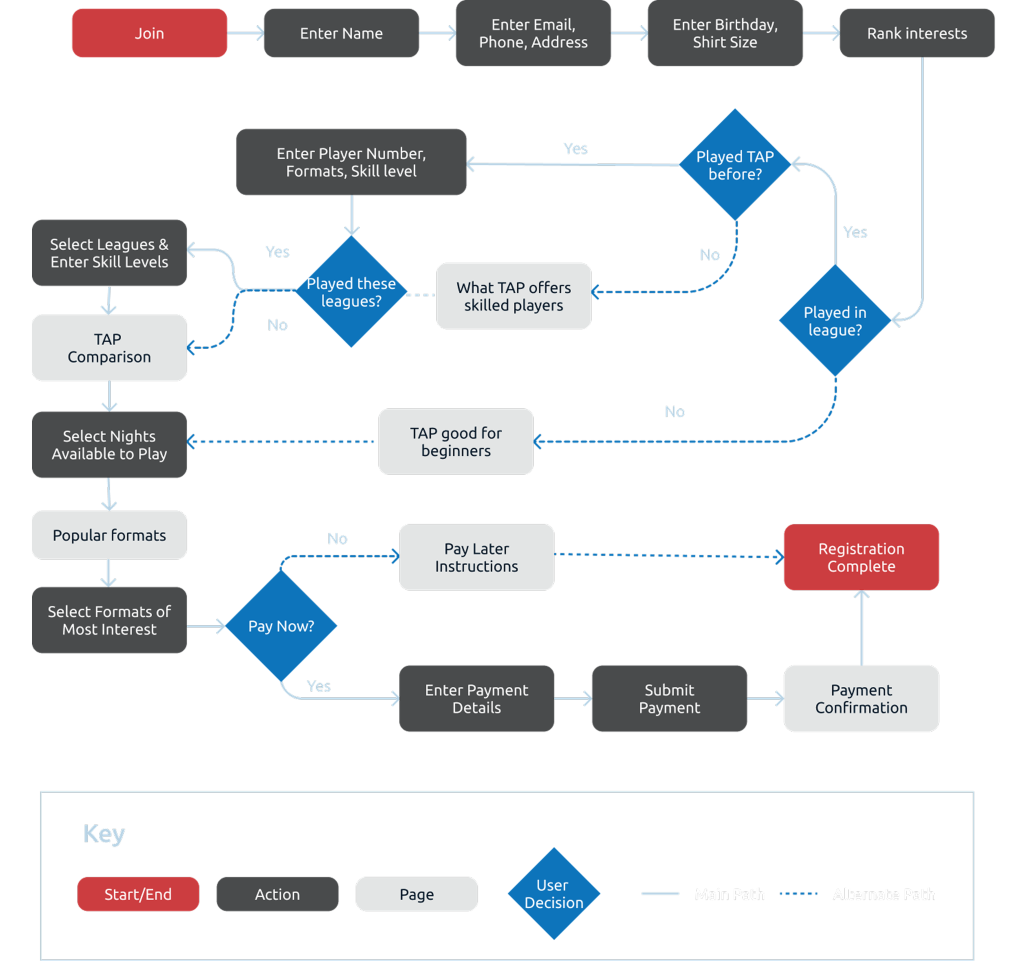
Players are gradually introduced to the league with information relevant to them
Putting our design to the test
To evaluate the usability of our design, we conducted five individual usability tests with both experienced league members and newcomers. By closely observing participant behavior, we were able to identify what was working and where improvements were needed.

The league’s value is clear
All participants said “Choose TAP” displayed the information they needed to make a decision about joining the league.
Rulebooks are easy to find and use
While most participants chose to skim rather than search, all were able to locate rulebooks quickly.
Progressive registration is preferred
Participants said it’s quick, simple, and they don’t get lost or miss an input field.
A member directory is critical for the MVP
All members want the ability to research or connect with fellow league members.

News labels were confusing
All participants struggled to understand the difference between News and Features. We renamed these sections Bulletins and Spotlights for clarity.
Filtering the schedule by My Teams is limiting
Members need a view of the schedule for the entire league. Add this capability with sorting and filtering by teams.
TAP League credibility needs a boost
Emphasizing the TAP network size and reach might reassure players that they are joining an established, reputable league.
Reflecting on the process
Working with Manasota TAP introduced us to a new sport, a passionate community, and a meaningful design challenge. It was especially rewarding to support a friend and client, Michael Kandy, in building what he envisioned as the best pool league experience around. Conversations with players revealed something powerful: no matter their reason for joining, everyone wanted to feel like the league genuinely had their best interests at heart.
A significant challenge was balancing user needs with the constraints of an MVP. With limited resources, we had to get creative. For example, instead of implementing a costly online payment system, we used Venmo for digital payments. Similarly, we opted for a user portal that allowed members to view profiles and contact info, but without the complex features like in-site messaging. These solutions struck the right balance between functionality and feasibility, while keeping the focus on delivering a positive, user-centered experience.