
Jo Agent
A smart AI chat feature to help people overcome the complexities of insurance and do more with their policy online
Craft
Product Design, UX Research, UX Content Writing
Timeframe
December – March 2025
Empowering people to navigate insurance with AI
Working in the property insurance industry since 2001, I’ve witnessed firsthand how technology has transformed the way people buy and manage their insurance. Today, getting a quote takes seconds: just enter your name and address, and insurtech platforms pull property data to prefill the rest.
But then comes the hard part: confirming all that data. Roof type, slope, replacement value… what does it all mean? Faced with unfamiliar terms and uncertain choices, hesitation creeps in. A JD Power study found that while 74% of consumers research insurance online, only 24% complete a purchase. A 2023 study revealed a similar trend: 75% of Millennials and Gen Z consumers want access to an insurance professional when purchasing online because they lack confidence in their understanding of coverage options.
This creates a frustrating gap. People want the convenience of managing insurance online but don’t feel equipped to do it alone.
Our Challenge
As a longtime insurance pro, I’m frustrated that buying home insurance online still isn’t as seamless as auto insurance. I get that home insurance is more complex, but there has to be a better way. Could we create an experience that simplifies the process and gives people the confidence to make informed decisions online?
The Solution
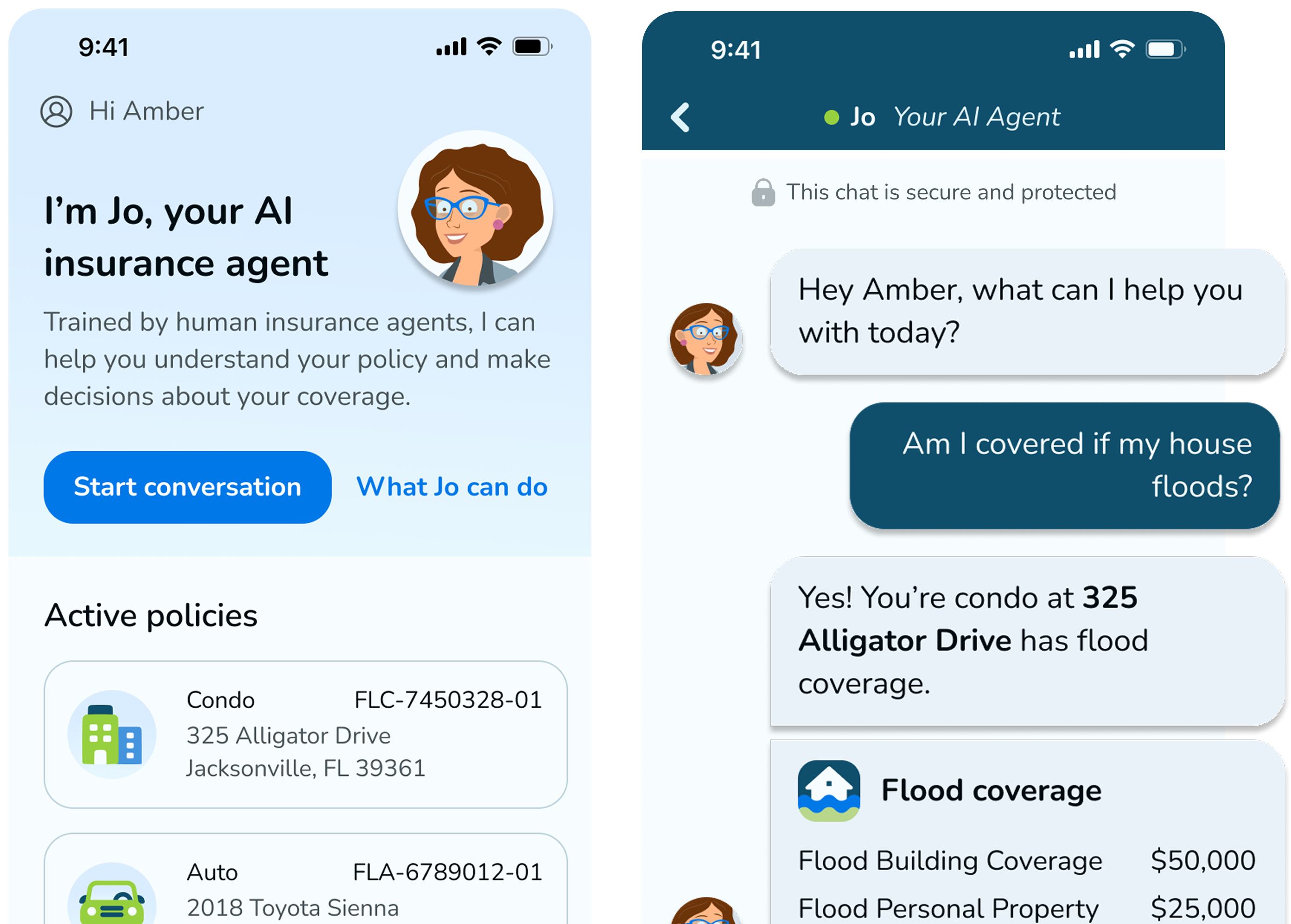
We designed Jo, a smart AI chat assistant that acts as an agent-like presence, answering policy-specific questions, presenting coverage options, and guiding users through policy changes. Available 24/7, Jo interacts naturally, much like a human agent, while being easy for insurance carriers to integrate into their websites.
Current chat offers little support
To assess the current landscape, we turned to some of the biggest names in insurance, plus newcomers known for their use of technology. Aside from Lemonade, most sites lacked true AI support. Instead, their “assistants” were basic automated chatbots with limited capabilities, often leading to frustrating, unresolved interactions.
Progressive
Geico
Lemonade
Kin

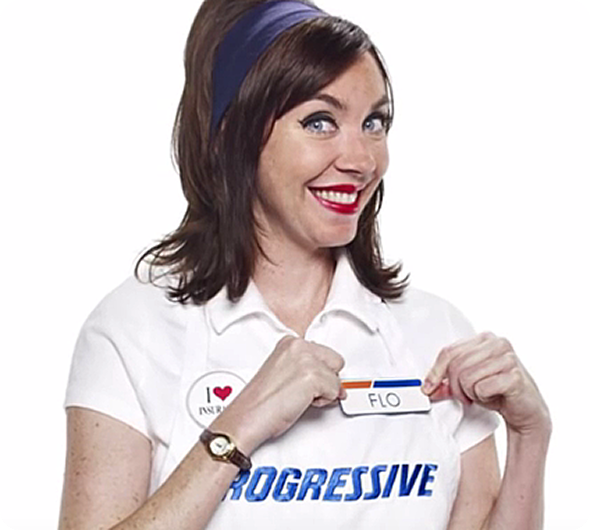
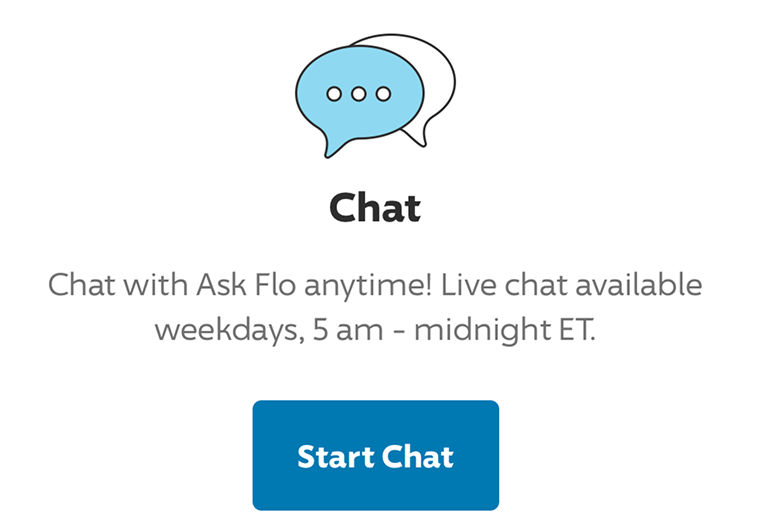
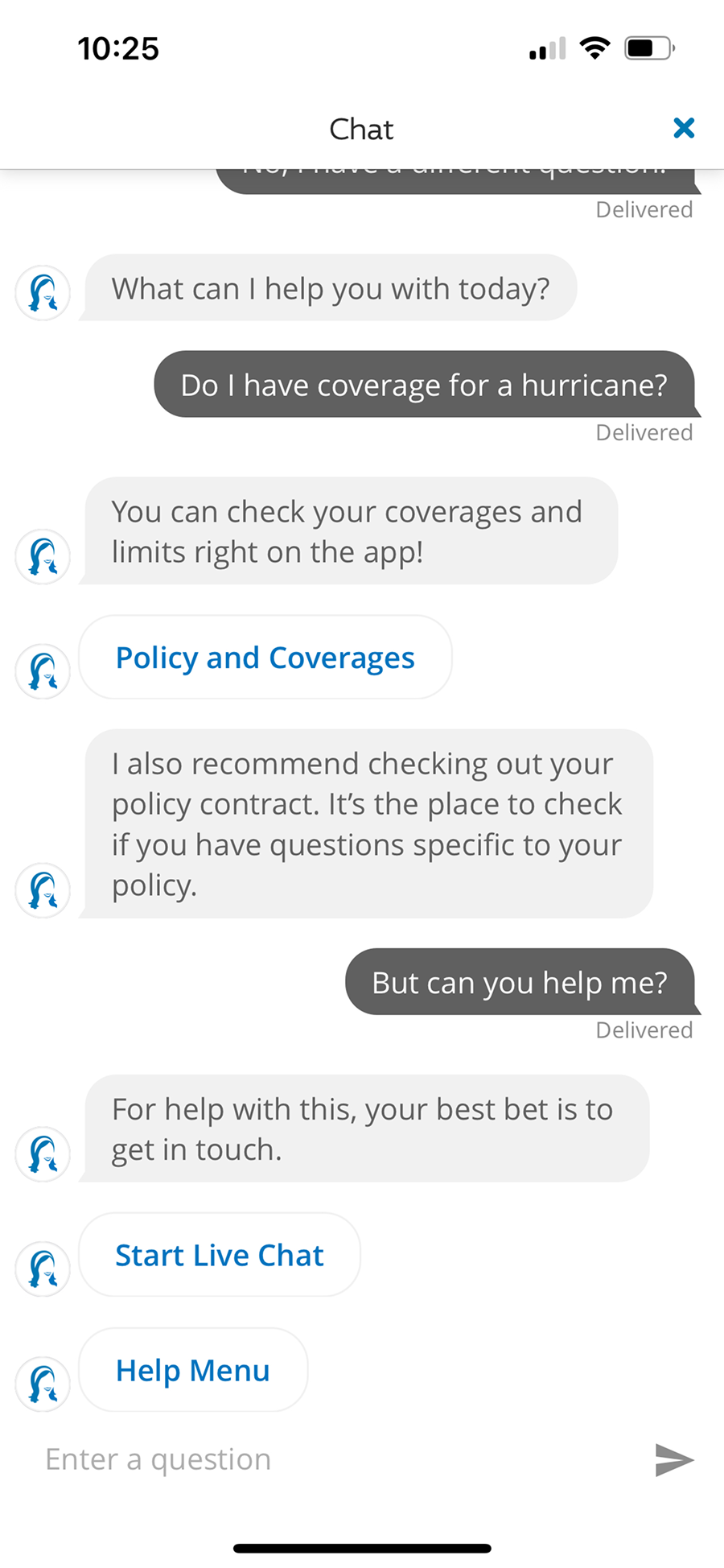
Is this the same helpful Flo from TV?
- “Ask Flo” doesn’t directly answer questions
- Instead, she redirects users to their policy contract or the app with no additional guidance
- If that fails, she instructs users to talk to a human

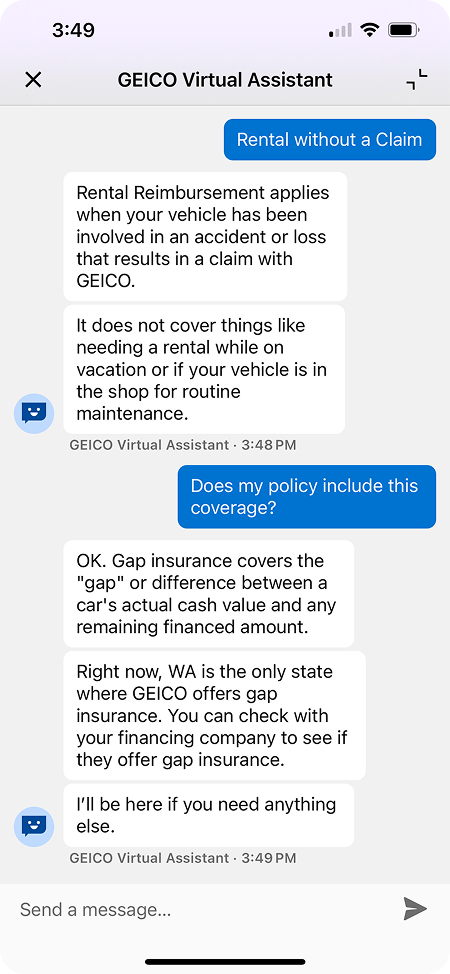
GEICO Virtual Assistant has glitches
- Allows open chat, but misinterprets questions, creating confusion and distrust
- Virtual assistant floats and follows the user, making chat easy to access
- Chat looks and sounds generic – a disconnect from the brand’s lovable gecko mascot



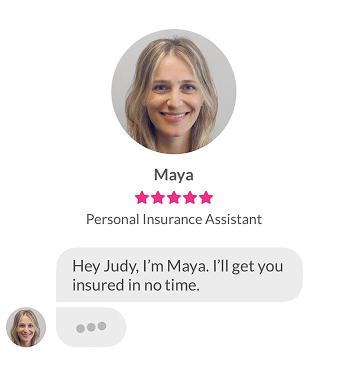
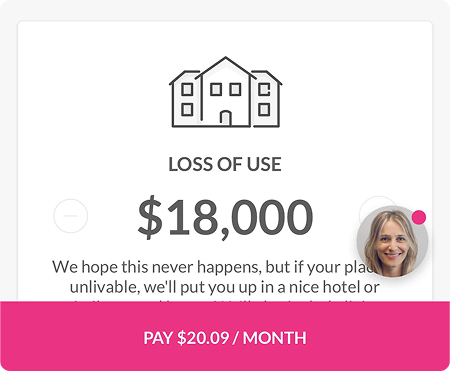
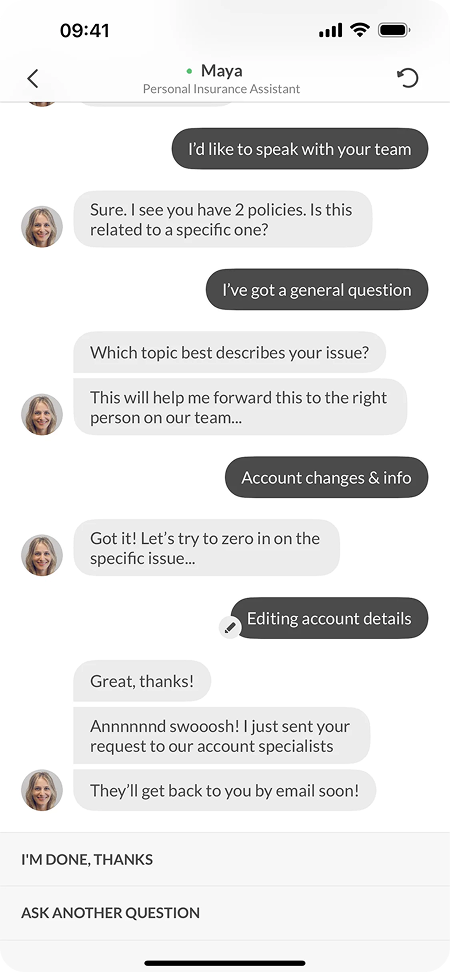
Maya looks and sounds human
- Open conversation is rare. Users are mostly limited to multiple choice options.
- Maya follows the user while completing tasks like purchasing a policy, always there to answer questions.
- Maya looks and sounds like a person, speaking in a casual, friendly tone.

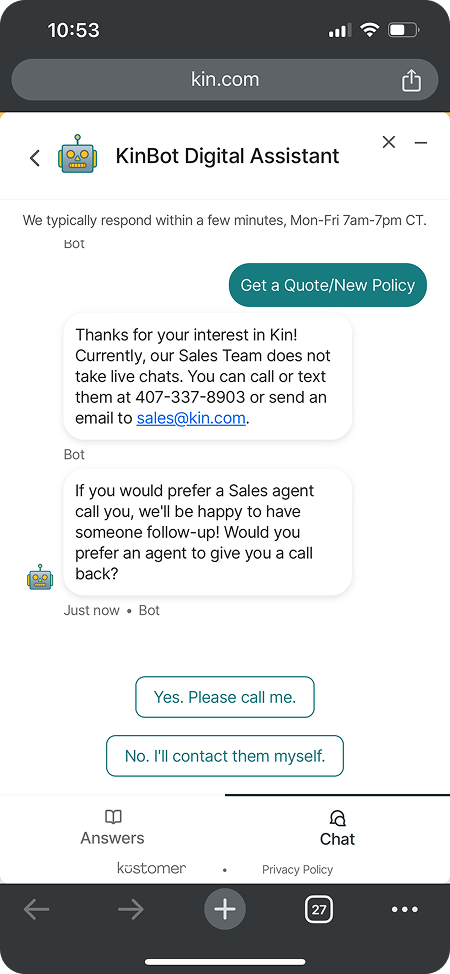
KinBot Digital Assistant feels clunky and unhelpful
- Users must choose from a list of tasks
- Users cannot ask questions
- KinBot is robotic in look and feel.
- All interactions point users to email or call.
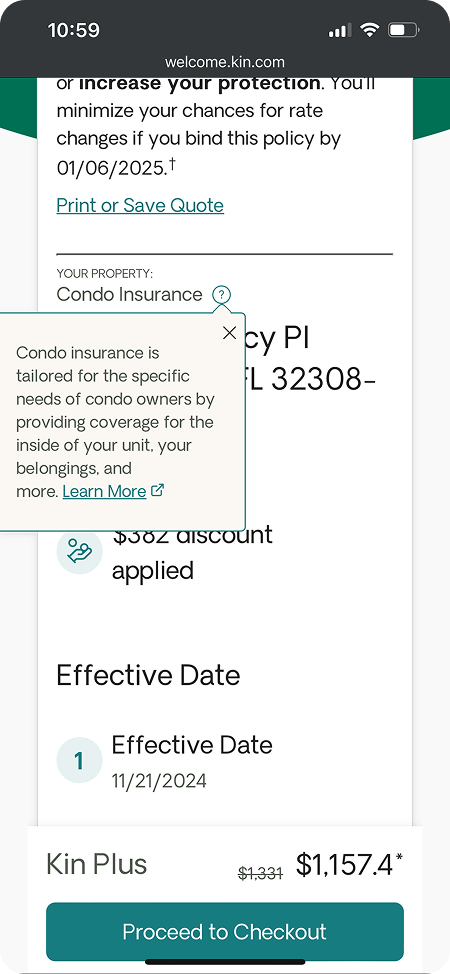
- Outside of KinBot, Kin offers helpful tool tips that guide users through getting a quote for home insurance
Understanding industry and user needs
To deepen our research, we spoke with a dozen individuals, beginning with former insurance colleagues to understand industry perspectives—why aren’t carriers leveraging AI more? We then conducted in-depth interviews with policyholders to explore their needs. Questions like “Where do you go when you have an insurance question?” and “How do you feel about AI chat?” helped us uncover valuable insights into how users think and behave.
Insights
Opportunities
All users have had bad chatbot experiences
Show value of trained, tailored AI Chat
All users prefer to self-manage simple tasks online
Introduce AI chat as another option
Some users don’t trust AI technology
Reassure it’s secure and accurate
Most users lack the confidence to make big decisions without help
Recreate the trusted agent experience
Users want instant service and answers
Provide easily accessible resolution paths
Most users struggle to understand unfamiliar accents
Overcome voice and language barriers
People want to buy and manage their insurance independently, but often lack the confidence to choose the right coverage.
How might we help people overcome the complexities of insurance and trust their decisions online?
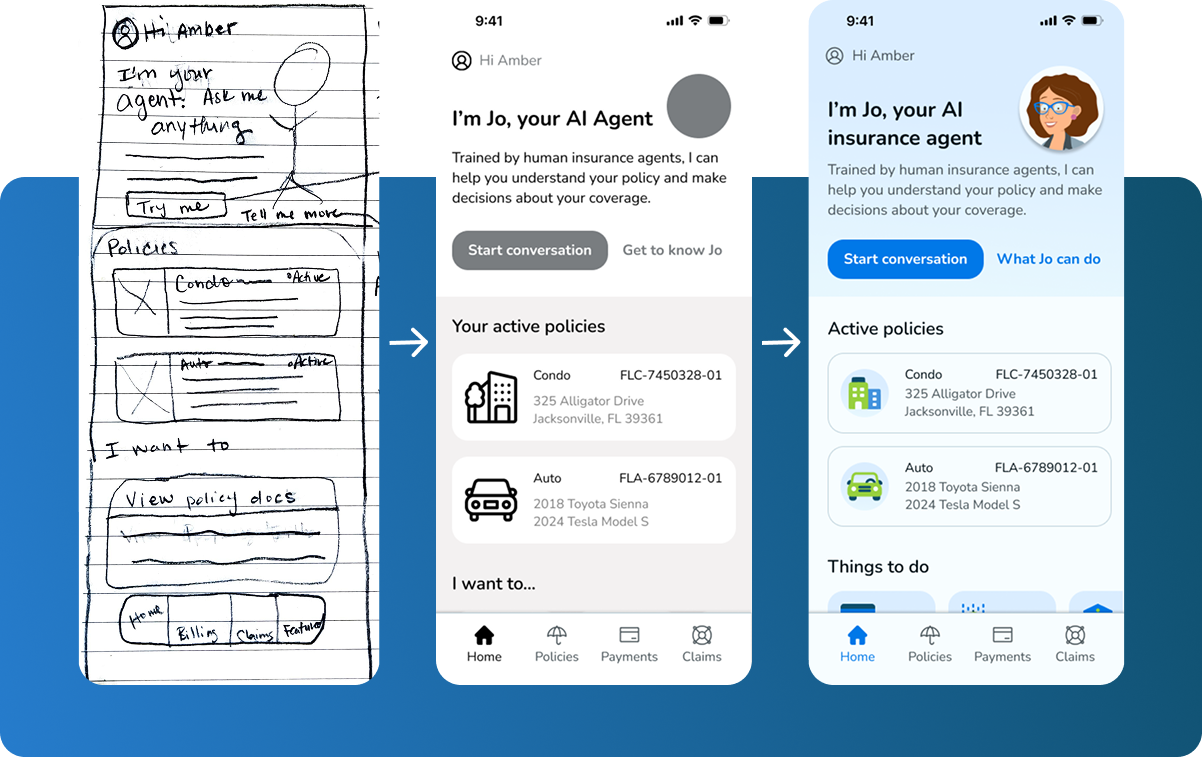
Introducing Jo, your AI insurance agent
Because people feel most confident making big decisions about their insurance coverage with the guidance of a trusted agent, we knew the online user experience needed to replicate this real-life interaction. Large language model AI, like ChatGPT and Gemini, is already enhancing customer engagement in other industries. This technology is an ideal solution because it can be trained by subject matter experts, respond in natural, human-like conversation, and integrate seamlessly into an insurance carrier’s website.
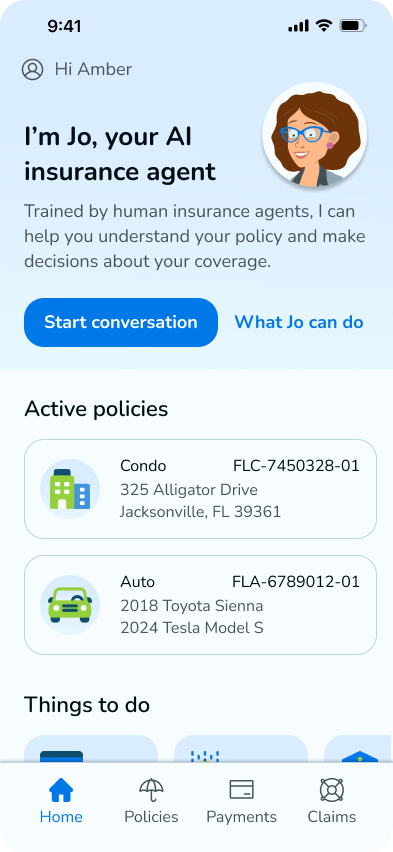
With this in mind, we created Jo—a prototype of an AI-powered chat feature designed to assist users with insurance questions and tasks.
Jo’s potential: Do people want it? Can they use it?
To assess Jo’s usability and desirability, we conducted tests with five participants, asking them to complete tasks like verifying flood coverage and adjusting policy limits. We also explored whether Jo was a realistic solution by asking, “Would you use Jo instead of contacting your agent?” These insights helped us determine both the demand for Jo and how intuitive the experience felt for users.
Test results indicated…

Participants will use Jo
4 of 5 participants said they would turn to Jo first, valuing the speed and ease of getting answers. They also trusted her responses, knowing they were backed by experienced agents rather than a random web search.
Jo is more accessible for some
Hearing-impaired users and those who struggle with unfamiliar accents found it easier to understand Jo’s responses.
Highlighting source material builds trust and teaches users
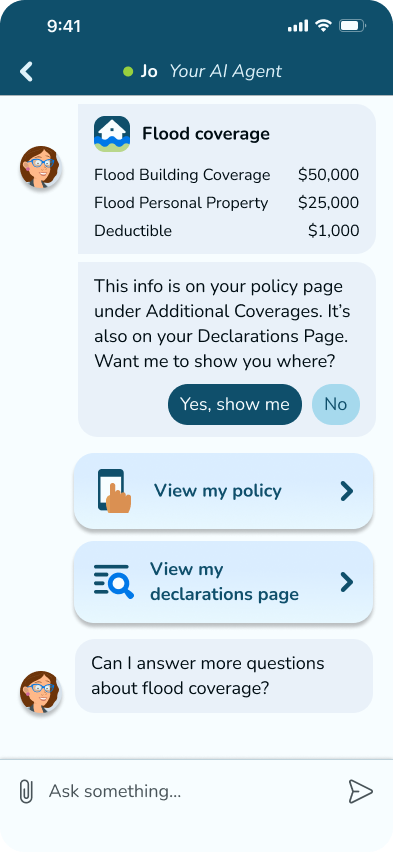
Participants trusted Jo’s responses because she clearly pointed them to the source material, such as the app and their declaration page. This not only provided reassurance but also empowered them to find the information on their own in the future.

Participants prefer Jo as a cartoon
When presented with different depictions of Jo, 4 of 5 participants preferred the cartoon version. They felt it was more neutral, personable, and less likely to be confused with a real human.
Jo presents coverage options like a human agent
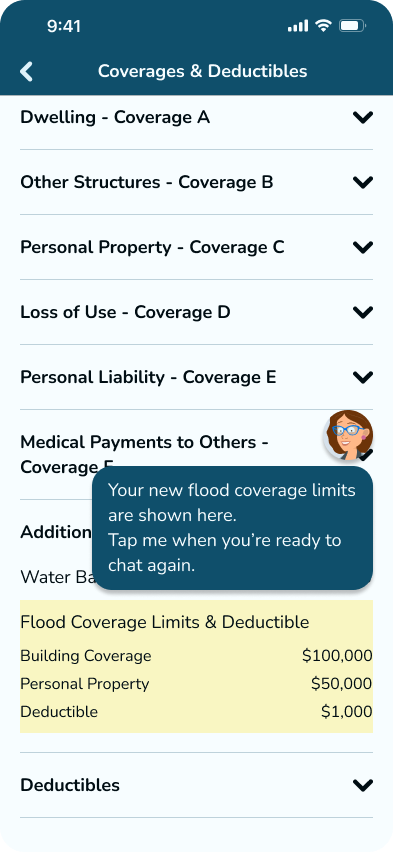
Participants appreciated the way Jo explained Flood coverage, providing supporting information that made the two options easy to compare. The experience felt familiar, resembling past interactions with human agents.

Participants want more customization of quotes
We added a prompt to let customers know that Jo can continue customizing coverage quotes through chat.
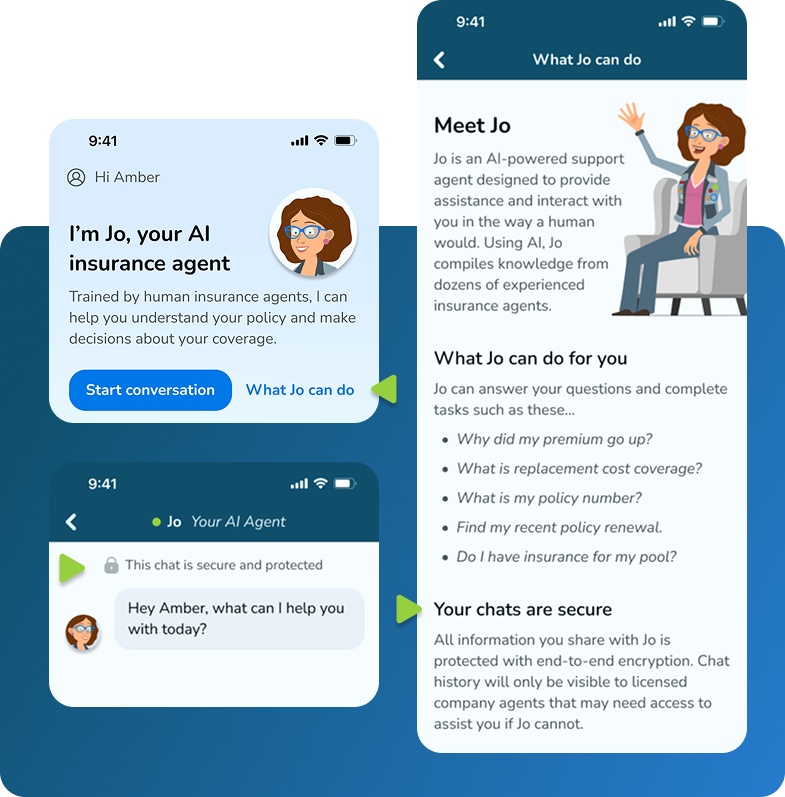
Participants are concerned about security
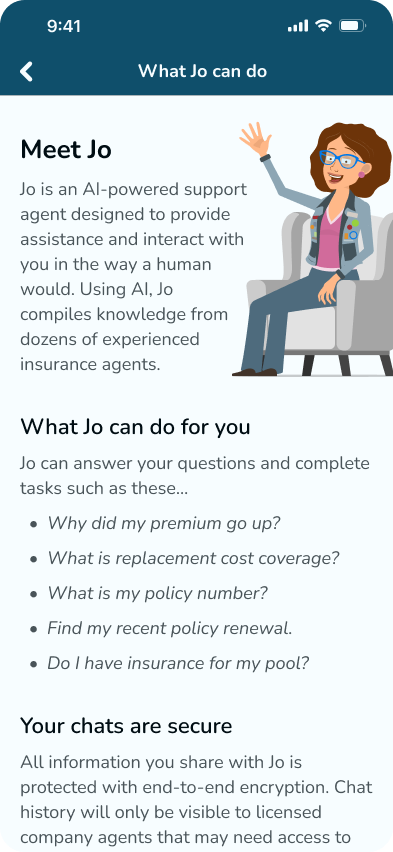
We added a message to explain that all data shared with Jo is private and encrypted.
Get to know Jo feels ambiguous
While participants found the information about Jo’s capabilities helpful, the phrasing didn’t capture their attention. “What Jo Can Do” offers more incentive to click.
KEY TAKEAWAY
Chat isn’t for everyone or every task
When asked to verify their deductible, three out of five participants chose not to ask Jo. Instead, they clicked into their policy, likely because it felt more familiar or faster. Over time, user behavior may shift, with more people turning to AI for these tasks. For the best experience, insurers should offer both options, allowing users to choose the method that works best for them.
Which do you prefer?
Take Jo for a spin and see for yourself. This interactive prototype is built in Figma, so you can click through a few common tasks and experience how the chat and traditional paths compare.
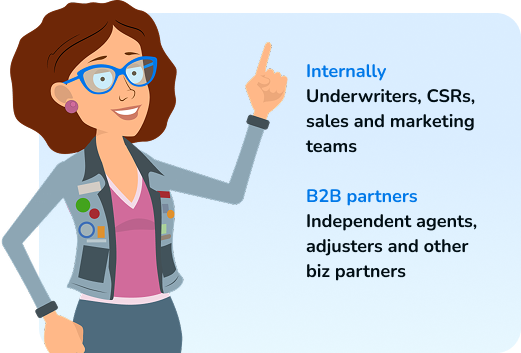
Other uses for Jo Chat
While this case study focuses on how Jo could directly interact with customers, it’s important to note that this isn’t the only use for the feature. Based on our research, we understand that insurers may be hesitant to release such a tool publicly due to the risks AI presents—liability concerns, regulatory scrutiny, and high implementation costs.
As a result, many companies are opting to roll out AI tools internally or for their B2B clients first. This approach allows insurers to manage risk exposure while still reaping the benefits of AI technology.
Interested in exploring how a feature like Jo could transform your operations? Let’s connect!